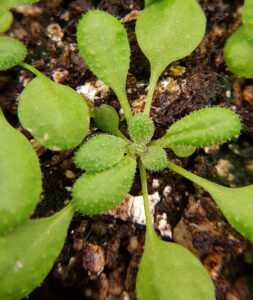
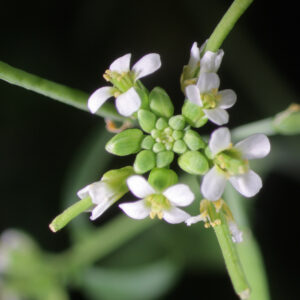
The Shpak Lab investigates how cells communicate and coordinate their behavior to shape plant growth and development. We are interested in a fundamental question in biology: how do individual cells work together to create functional organs?
Using Arabidopsis thaliana as a model system, we combine genetic, molecular, biochemical, and imaging approaches to uncover the mechanisms that control plant form at the cellular and tissue levels.
How are stem cells maintained while new organs are produced?
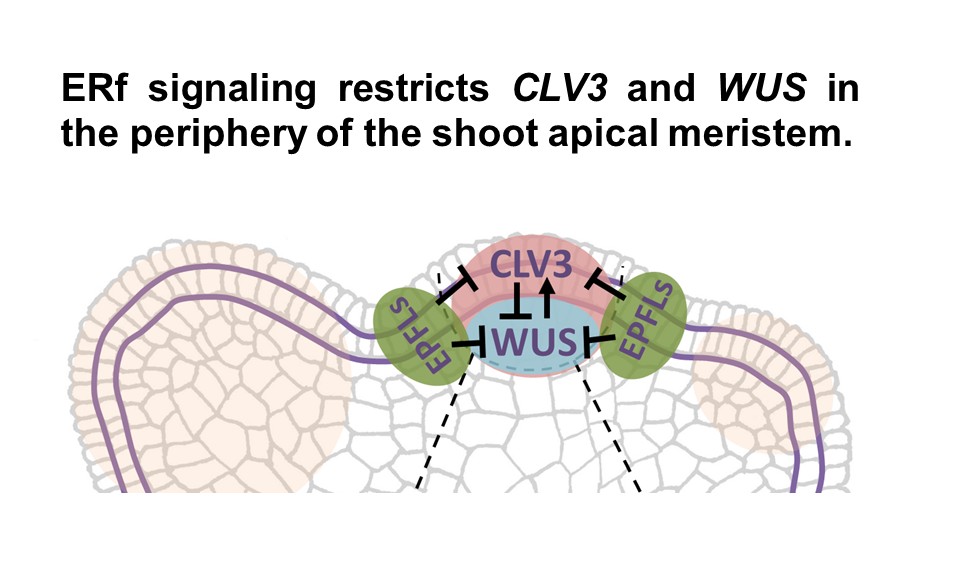
The shoot apical meristem provides the cells needed for continuous aboveground plant growth. A central question in developmental biology is how a stem cell population can remain stable while simultaneously producing differentiated tissues. We investigate how communication between cells at different regions of the meristem establishes the balance between stem cell maintenance and differentiation. Our work has shown that signaling pathways involving the ERECTA family receptor kinases and CLAVATA3 work together to control meristem size.
HOW ARE NEW ORGANS INITIATED AND POSITIONED?
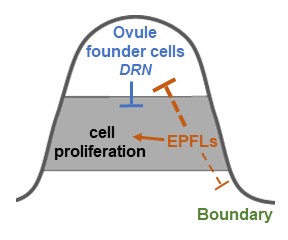
A defining feature of plant development is the continuous creation of new organs from the SAM. Leaves and flowers arise at specific positions and follow highly reproducible patterns. In carpels, ovules are initiated at specific distances from each other within the placenta. We study how molecular signals coordinate the transition from undifferentiated meristematic cells to organized organ primordia. Boundaries between developmental domains play critical roles in shaping organs and controlling growth. Our laboratory investigates how peptide signaling pathways regulate tissue patterning during development. Recent work demonstrated that EPFL1 and EPFL2 signaling promotes proper cell fate specification during ovule initiation.
Why study plants?
Plants are not simple organisms. They use sophisticated signaling networks to coordinate growth, respond to their environment, and build complex multicellular structures. Because plants continuously generate new organs, they provide exceptional systems for discovering fundamental principles of stem cells, cell communication, and tissue organization. Understanding how plants regulate growth is also essential for improving crop productivity and developing sustainable agriculture.